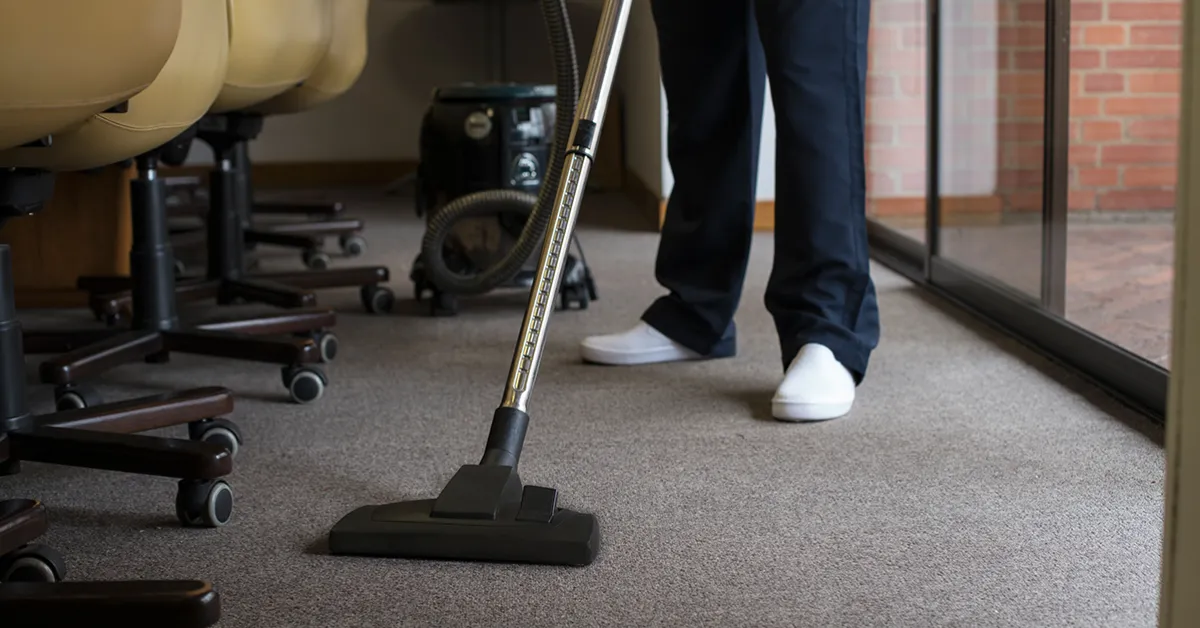
Most office managers only think about the carpet after someone points at a dark spot near the front desk. By then the dirt has been sitting in the fibers for months, and a quick vacuum will not pull it out. The truth is that carpet in a workplace wears out from the inside long before it looks bad on the surface. Soil, sand, and oil settle deep into the backing, and every step grinds them in a little further.
That is why office carpet cleaning frequency matters more than most people realize. If you get the timing right, your carpet stays clean, your air smells fresh, and you push replacement costs years down the road. If you get it wrong, you end up paying for new flooring far sooner than you planned. This guide breaks down how often carpet cleaning for offices is really needed in South Carolina, and what should drive that decision in your building.
Why South Carolina Offices Need Cleaning More Often
South Carolina weather is hard on floors. The humidity stays high for most of the year, which means moisture gets trapped in carpet fibers and dries slowly. Damp carpet holds onto odor, and it gives mildew a place to start. Add red clay soil, pollen season, and summer storms, and you have a mix that tracks straight through the front door on the bottom of every shoe.
This is exactly why commercial carpet cleaning South Carolina schedules look different from schedules in dry states. An office in Arizona might stretch cleanings out longer without much damage. An office in Columbia, Charleston, or Florence cannot. Local buildings need a tighter routine because the soil load is heavier and dries into the fibers faster.
A-1 Fresh & Clean Carpet Service, LLC works across the Midlands and the Lowcountry, and the pattern is the same in almost every office we walk into.
The Simple Answer on Frequency
For a standard office with normal traffic, professional cleaning every six months works well. That schedule keeps soil from building up and protects the warranty on most commercial carpet. Offices with heavy traffic, such as clinics, call centers, or busy front lobbies, do better on a quarterly plan. Very light traffic spaces, like private executive suites or small back offices, can often stretch to once a year without trouble.
Think of it as a starting point instead of a rule. Two offices in the same building can need different schedules because one has a break room and the other does not. The right approach to workplace carpet cleaning is to set a baseline, watch how the carpet holds up, then adjust. If traffic lanes start looking dull three months in, your building is telling you to move faster.
Traffic Is the Real Deciding Factor
Count how many people cross the carpet each day, not how many people work there. A ten person office that greets fifty visitors a day takes more abuse than a thirty person office where nobody comes in from outside. Entryways, hallways, and the path from the door to the reception desk carry most of the load, and those areas will always show wear first.
Weather adds another layer. Rainy months push more water and grit inside, so many South Carolina businesses add an extra cleaning in late winter or early spring. Pollen season does the same thing. Smart planning around commercial carpet cleaning means treating your entry zones more often than the rest of the floor, which is cheaper than cleaning the whole space every time.
What Happens If You Wait Too Long
Dirt is not soft. Soil trapped in carpet acts like sandpaper, and every footstep cuts at the fibers. Once those fibers break down, the carpet looks flat and gray no matter how well it gets cleaned later. That damage cannot be reversed, and it is the main reason offices replace carpet years before they should.
There is a health cost too. Carpet holds dust, pollen, and bacteria, and those particles get kicked back into the air every time someone walks by. Staff start complaining about stuffy noses and headaches, and nobody connects it to the floor. Skipping professional office carpet cleaning also creates a first impression problem, because clients notice a tired lobby even when they do not say anything about it.
Building a Maintenance Plan That Works
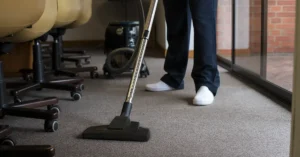
A good plan has three layers. Daily vacuuming handles loose soil before it settles. Spot treatment takes care of spills within the first few minutes, which stops most stains from setting. Then professional cleaning pulls out the deep soil that vacuums cannot reach. Skip any one of the three and the other two start losing ground.
Entry mats deserve more credit than they get. A long walk off mat at every door traps a large share of the grit before it ever touches your carpet. Pair that with a set schedule for carpet cleaning for offices and your office carpet maintenance costs drop sharply over time. Carpet cleaning for offices done on a plan is always cheaper than emergency cleaning done in a panic before a client visit.
Signs Your Office Is Overdue
Look at the traffic lanes first. If the path from the door to the desk is a shade darker than the carpet around it, soil has already built up. Musty smell in the morning is another clear signal, and so is carpet that feels stiff or crunchy underfoot. Spots that keep coming back a few days after cleaning usually mean soil is wicking up from the backing.
Trust your eyes and your nose over the calendar. A schedule is a guide, not a promise, and buildings change as staff and traffic change. When two or more of those signs show up together, it is time to book service instead of waiting for the next planned date. The team at A-1 Fresh & Clean Carpet Service, LLC can look at your traffic pattern and tell you honestly whether you need quarterly or twice yearly service.
Frequently Asked Questions
How often should office carpets be professionally cleaned?
Most offices in South Carolina do well with professional cleaning every six months. High traffic spaces such as medical offices and call centers usually need quarterly service, while low traffic suites can go about once a year.
Does regular vacuuming replace professional cleaning?
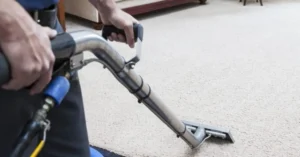
No. Vacuuming removes loose surface dirt, but it cannot reach the oily soil bonded deep in the fibers. Professional office carpet cleaning uses hot water extraction to flush that soil out, which vacuuming alone never does.
Will cleaning the carpet disrupt our workday?
It does not have to. Most jobs are scheduled after hours or over the weekend so your team walks into a clean office the next morning. Larger buildings can be cleaned in sections to keep every department running.
How long does office carpet take to dry?
With proper extraction and airflow, most commercial carpet dries in four to eight hours. High humidity slows that down, so fans and good air movement matter a lot in South Carolina buildings.
Can professional cleaning remove old stains?
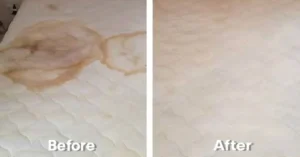
Many old stains do come out, especially coffee, food, and general traffic soil. Stains that have bleached or dyed the fiber cannot be reversed, but a technician can tell you what is realistic before any work begins.
Book Your Office Carpet Cleaning in South Carolina Today
Your carpet is one of the first things a client notices and one of the last things anyone thinks about. Getting on a set schedule takes the guesswork out of it and protects the money already sitting in your floor. A-1 Fresh & Clean Carpet Service, LLC has been handling office carpet cleaning for businesses across Columbia, Charleston, Charlotte, Augusta, and Florence, and every job starts with an honest look at what your building actually needs.
Whether you want a quarterly plan or a single deep clean before an important visit, we will build the schedule around your traffic and your budget. Call A-1 Fresh & Clean Carpet Service, LLC at (803) 800-0020 to book a walkthrough and get a straight quote with no pressure.