
WELLCOME TO A-1 Fresh & Clean
Tile & Grout Cleaning Charleston SC
Walk into any restaurant kitchen or office restroom in this town and look down at the lines between the tiles. The tile itself is usually fine. The grout has gone from light gray to a dull brown, and no amount of mopping brings it back, because the mop is part of the problem. Health inspections notice it, customers notice it, and in a kitchen a greasy tile floor is a slip claim waiting to happen. Tile & grout cleaning Charleston SC businesses and homeowners actually need has to flush the grout out under pressure, not scrub across the top of it.
Get a Free Quote
Other services
Why Charleston Grout Goes Dark So Fast
Grout is porous, closer to a hard sponge than to stone. Every time somebody mops, they drag dirty water across the floor and the grout lines are the lowest point, so all of that water settles right into them. The tile rinses clean and looks fine. The grout absorbs the dirty water, holds it, and dries a shade darker than before. Do that a few times a week for a couple of years and you have layers of soil baked into a material that was never meant to be cleaned by hand.
The Lowcountry speeds it up. Our humidity keeps grout damp for most of the year, and damp porous grout absorbs more and dries slower, which also gives mildew a place to grow along shower lines and in restroom corners. Sand and salt come in on every pair of shoes and grind into the lines near entrances, and in commercial kitchens airborne grease settles onto the floor and mixes with all of it. That is why the grout by a fryer or a front door is almost black while the grout under a shelf still looks new, and it is why most tile and grout cleaning North Charleston SC restaurants and warehouses call us about starts at the entrance and the kitchen line rather than anywhere else in the building.
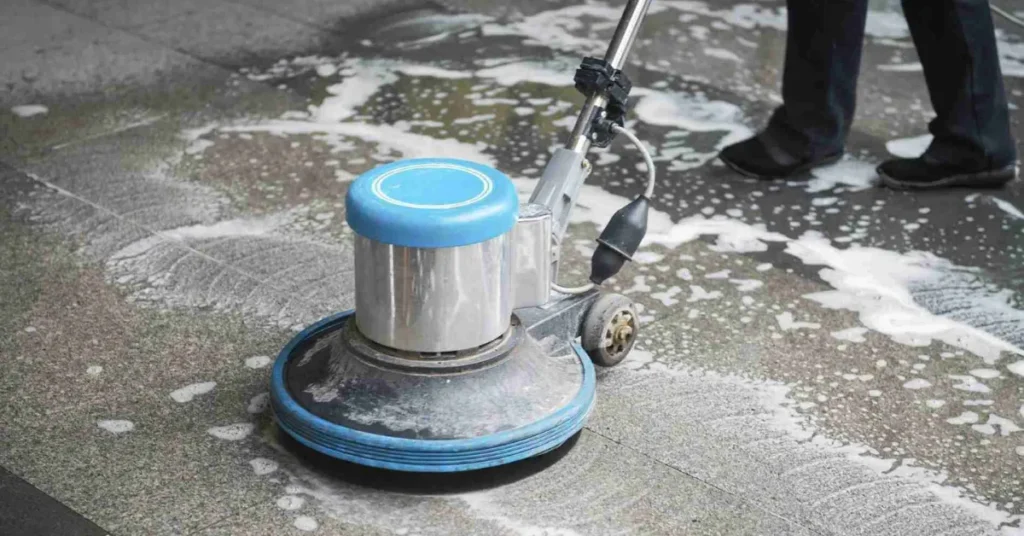
Commercial Floors We Clean Across Charleston
Business tile takes abuse that no home floor sees, and it is usually the first thing a customer or an inspector looks at. Most of our Charleston work is commercial, and the scheduling matters as much as the cleaning does.
We work overnight, early morning or on weekends so your floor is dry and back in service before you open. For high traffic properties we set up a rotating schedule that stops the grout from ever reaching the point of needing an aggressive restoration.
Restaurants, Bars and Commercial Kitchens
Kitchen floors collect grease that drifts off the line and settles into every grout line, and a greasy quarry tile floor is a genuine safety issue for your staff before it is ever an appearance issue. Degreasing has to happen at the grout level, not just on the surface, or the floor stays slick after mopping.
We use an alkaline degreaser sized to the buildup with real dwell time, then flush and vacuum recover in the same pass so the dirty water goes into our tank instead of into the floor drain and back across the room. Dining room tile, bar areas and restroom floors get done in the same visit.
Offices, Medical, Retail and Hospitality
Lobbies, restrooms, break rooms, elevator landings and retail entrances all show grout wear along the main walking routes first. Medical and dental suites have the added requirement that the floor has to look clinically clean, which surface mopping never quite achieves once the grout has darkened.
Hotels, short term rentals and apartment turnovers are steady work for us here too. Tile cleaning Charleston SC property managers book between tenants moves fast, and sealing afterward is what keeps the next tenant from calling about the same floor a year later.
Residential Tile We Handle
Home kitchens, bathrooms, entryways, laundry rooms and sunrooms are the rooms that get called about most. Kitchens are grease and dropped food, entryways are sand and clay, and bathrooms are product residue plus humidity that never fully clears.
Showers are their own battle. You have soap scum bonded to the tile, hard water minerals along the edges and mildew growing in the grout and the corner caulk, and bathroom sprays run down the wall before they can do anything to vertical grout. We treat the scum and the mineral film separately from the mildew because they are different problems, and we flag worn caulk for you since mildew that keeps returning is usually growing behind it rather than on it.
Tile Types and What Each One Needs
Ceramic and porcelain are the most straightforward because the glaze protects the tile and the real work is in the grout. Textured porcelain holds more soil in its surface and needs more agitation to release it. Quarry tile in commercial kitchens is unglazed and porous itself, so it takes a different approach than the tile in a dining room does.
Natural stone needs care and this is where a lot of floors get ruined. Travertine, marble, limestone and slate etch permanently if an acidic product touches them, and the strongest thing on a hardware store shelf is usually acid based. Those floors get pH neutral solutions and controlled pressure. Historic downtown properties often have stone or original tile that needs the gentlest approach we have, and we identify what you are standing on during the walkthrough before choosing anything.
Sealing, and Why It Decides Everything
Sealing is what determines whether your floor stays clean or goes right back to dark within a year. A penetrating sealer soaks into the grout and blocks liquids from being absorbed, so spills and mop water sit on top long enough to be wiped up instead of soaking straight in. In this humidity, unsealed grout starts absorbing again immediately, which is why a floor that was cleaned but never sealed disappoints people so quickly.
Color sealing is the other option worth knowing about. If your grout is permanently discolored, patchy or mismatched from years of wear and repairs, a color seal coats the lines in one uniform shade and seals them at the same time. It is the practical alternative to regrouting a whole room and it costs a fraction of what that would.
What the Job Actually Involves
We start by walking the space with you, identifying the tile, checking the grout condition and giving you a firm price. Nothing gets touched until you agree to that number. Then we sweep and vacuum, protect baseboards, cabinet bases and adjacent surfaces, and apply the cleaning solution directly to the grout lines.
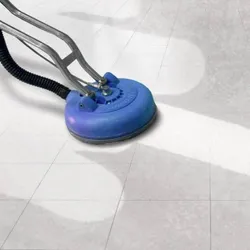
The solution needs dwell time to do the chemical work, so we let it sit rather than rushing it. Then we agitate the lines, run a pressure and vacuum head across the floor that flushes the buildup out and recovers the dirty water in the same pass, and hand detail the corners and edges where the machine cannot fit. Floors are usually dry within an hour or two. A rental machine cannot replicate any of this because it has no recovery vacuum, so it just loosens the soil and leaves it in the lines to dry back in.
Years of Experience
15+
When Cleaning Is Not the Answer
Sometimes the grout has already failed, and we would rather tell you than take the money. If your grout is cracking, crumbling out or missing in sections, water is getting under the tile and that leads to loose tiles and subfloor damage, which in this climate happens faster than people expect.
A-1 Fresh & Clean Carpet Service will show you where the grout has failed and tell you plainly whether it needs regrouting before cleaning and sealing makes any sense. Same with permanently stained grout, where color sealing is the honest answer instead of a cleaning that will look better for a week. That approach is where our BBB rating came from, and it is why a good share of this work reaches us from customers who paid somebody else first.
Service Area Across the Tri County
Overnight, early morning and weekend scheduling for commercial floors, daytime slots for homes.
- Downtown Charleston
- Mount Pleasant
- West Ashley
- James Island
- Johns Island
- Daniel Island
- North Charleston
- Hanahan
- Goose Creek
- Summerville
- Ladson
- Moncks Corner
- Isle of Palms
- Sullivan’s Island
- Folly Beach
- Kiawah and Seabrook
Frequently Asked Questions
It is quoted by square footage along with the tile type, how heavy the buildup is and whether you add sealing. Commercial jobs with recurring schedules get a better per visit rate. We give you a firm number after a walkthrough, before any work starts.
Yes, and most of our commercial work happens that way. We schedule overnight, early morning or weekends so your restaurant, office or retail floor is dry and open on time. Floors are typically walkable within an hour or two.
Usually one to two hours, because the machine recovers most of the water as it goes rather than leaving it on the floor. If you add a sealer, plan on staying off the area longer while it cures and we will give you the exact timing on the day.
In most cases we get it back close to its original color, and people are often surprised how light it started out. Grout permanently stained by dye, rust or years without sealing may not fully return, and that is when color sealing is the better route.
In this humidity, yes. Unsealed grout is porous and starts absorbing mop water and spills right away, so a floor cleaned but never sealed tends to darken again within a year. Sealed grout stays lighter far longer and wipes up much easier.
Yes, with the right products. Natural stone etches permanently with acidic cleaners, so those floors get pH neutral solutions and controlled pressure. We identify your tile during the walkthrough before anything is applied.
Restaurants and other high traffic commercial floors usually need it every three to four months. Offices and retail do well twice a year. Most homes are fine every twelve to eighteen months, and sealed grout stretches all of those intervals out.